
Texas Heat Stress Is a Property Management Problem

Texas heat has a way of exposing weak points across a commercial landscape fast. Entrances, pavement edges, courtyards, and newly installed beds are usually the first places it shows. By May, temperatures across DFW and Houston are already climbing, with above-normal heat expected through the summer and the most intense conditions likely in July and August. Landscape stress won't come from heat alone. Soil moisture disappears week after week as temperatures hold.
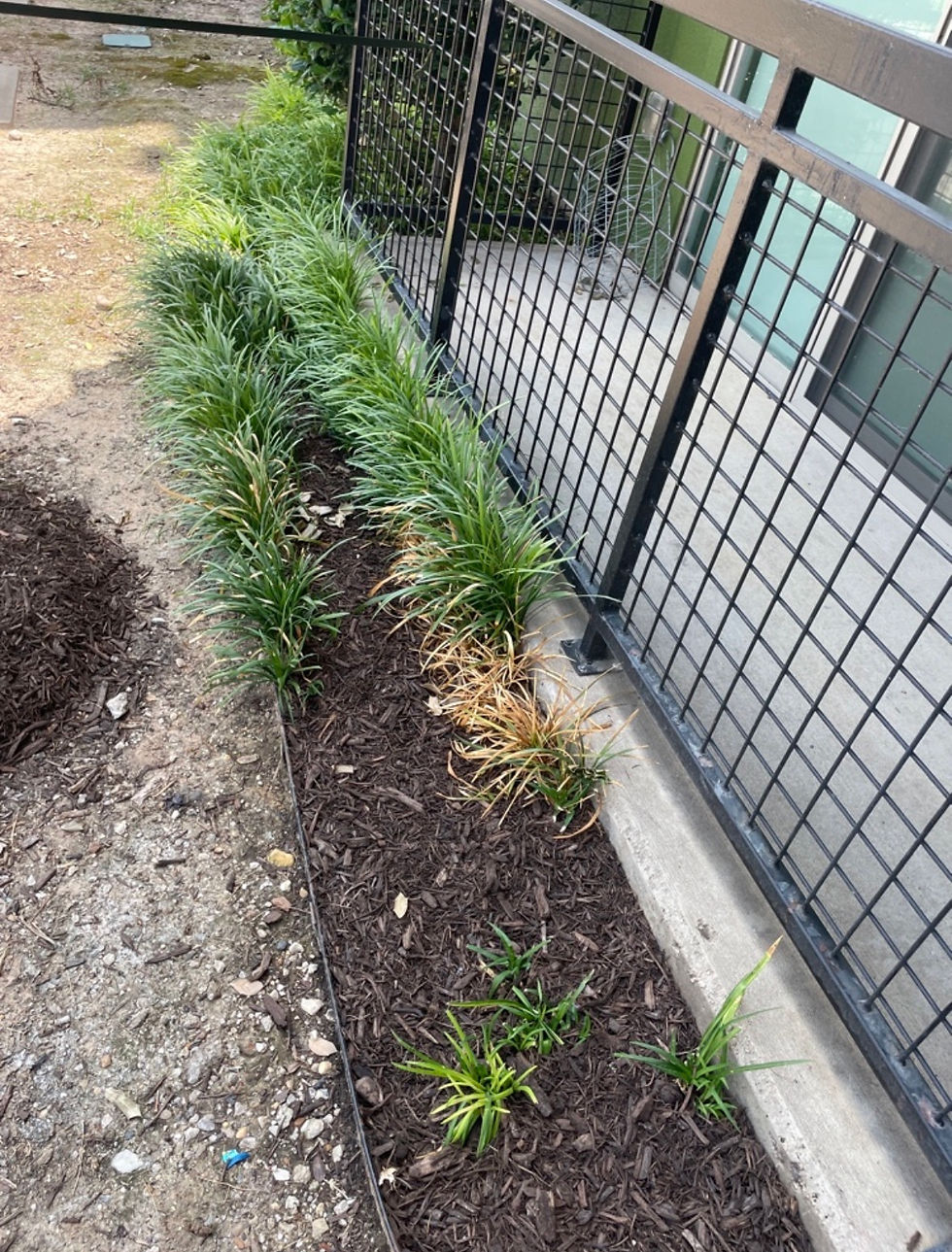
For multifamily and commercial properties, this shows up quickly. Residents notice the wilting entrance beds, scorched turf near parking lot edges, and thinning seasonal color
along leasing paths and pool courtyards. Visible stress usually means the plant has already been struggling for days or weeks. The properties that hold up best are the ones being watched before the stress is obvious.
What's Actually Happening to Your Landscape
Through September, sustained heat will put pressure on both plant material and irrigation systems.
When temperatures hold above 85°F for extended periods, plants lose moisture faster than their root systems can replace it. Soil dries out and plants redirect energy away from growth and toward survival.
Once that heat stress starts, it rarely stays cosmetic. On a commercial property, that can mean:
Plants become more vulnerable to disease, pests, and decline.
Irrigation systems work harder, and without the right adjustments, properties can use more water without solving the actual coverage issue.
Turf begins thinning in areas where coverage is already uneven, especially near pavement, parking edges, and high-heat zones.
Young trees and newly installed plant material face higher risk because their root systems are still developing.
Small issues become larger conversations: a dry zone in May can become a turf replacement by August, and a struggling bed near the leasing office can become a curb appeal issue during the season residents notice most.
What starts as a landscape problem can quickly become a budget conversation that wasn't in the plan.
What Your EarthWorks Team Is Watching For

By the time damage is easy to see, the site has usually been under stress for a while. On property, that means checking dry zones, evaluating irrigation coverage, monitoring reflected heat areas near pavement and parking edges, and tracking plant material that starts struggling before the issue spreads across the bed.
During each property visit, your EarthWorks team is watching for signs like these.
Wilting in high-visibility beds. When root systems can't supply enough moisture to support the plant above, stems and leaves begin to droop. Entrance beds, leasing paths, courtyards, and planted areas near pavement get close attention. Reflected heat from hardscape accelerates stress in those zones faster than anywhere else on the property.
Leaf rolling or cupping. Certain plant varieties curl their leaves inward during extreme heat to reduce surface exposure to the sun. It signals the plant is under real pressure, even before visible damage appears.
Scorched or browning leaf edges. Dry, crispy margins on leaves indicate heat damage to leaf tissue. Caught early, the response options are broader. Left unaddressed, it can mean tissue loss and plant replacement.
Sunscald on exposed plants. Leaves or stems in direct, prolonged sun may appear bleached, dried, or sunken. Recently installed plant material that hasn't established strong root systems yet is the most vulnerable and receives close attention during peak heat.
Premature leaf drop. Shedding foliage is how some plants conserve water under stress. It warrants an immediate look at watering coverage and soil moisture in that zone.
Dry or thinning turf. Heat stress in turf shows up as color loss, thinning, or bare patches, often concentrated near hardscape, parking lot edges, and turf strips along pavement where irrigation coverage gaps are most common.
If you're noticing any of these on a walkthrough, that's exactly what to bring to your EarthWorks team. Recurring stress in the same areas across seasons is worth flagging. Repeated patterns usually point back to the condition causing the problem, whether that's an irrigation gap, a drainage issue, or plant selection that isn't suited to the site.
Not sure if your property is covered heading into this summer? Request a Landscape Assessment and we'll evaluate your highest-risk areas before peak temperatures arrive.
How EarthWorks Manages Summer Heat Stress
Your EarthWorks team works as an extension of your property management operation, not a vendor you call when something goes wrong. In practice, that means:
Walking the property for dry zones, overspray, inconsistent coverage, and plant material showing early signs of stress.
Flagging irrigation heads that need attention before coverage issues spread.
Identifying repeat problem areas before they compound season after season.
Adjusting irrigation scheduling, maintenance timing, and priority areas as temperatures climb, not after damage is already showing.
Planning seasonal color and plant selections around what can realistically hold up through peak Texas heat.
Tracing recurring stress back to the condition causing the pattern, instead of patching the same areas every summer.

Want to see how EarthWorks plans seasonal color for Texas properties? Download the Essential Seasonal Color Management Guide and see how we approach color selection, timing, and plant performance through every season.
That gives property teams a clearer plan before small issues become replacement costs or ownership concerns.
Our crews know these properties. Same team. Same account manager. Season after season.
Summer heat may be unavoidable. Visible decline across your property shouldn't be.
EarthWorks has worked with commercial and multifamily properties across DFW and Houston since 1979. Rooted in our commitment to quality, we know what Texas summers do to landscapes and what it takes to protect your property's curb appeal, your irrigation investment, and your team's ability to give ownership a confident answer when they walk the property in August.
That's the EarthWorks Effect.
May Is the Time to Check Coverage
Catching heat stress early gives property teams more options. A dry zone can often be corrected before it becomes a turf replacement. A struggling bed can be adjusted before it becomes a visible curb appeal issue during leasing season. A repeated stress pattern can be planned for before it turns into another surprise expense.
July and August will expose the weak spots. The question is whether your landscape coverage is ready before they do.
If you're not confident heading into this summer, Request a Landscape Assessment today. We'll evaluate your irrigation, identify your highest-risk areas, and help your team correct weak spots before peak heat arrives.


